
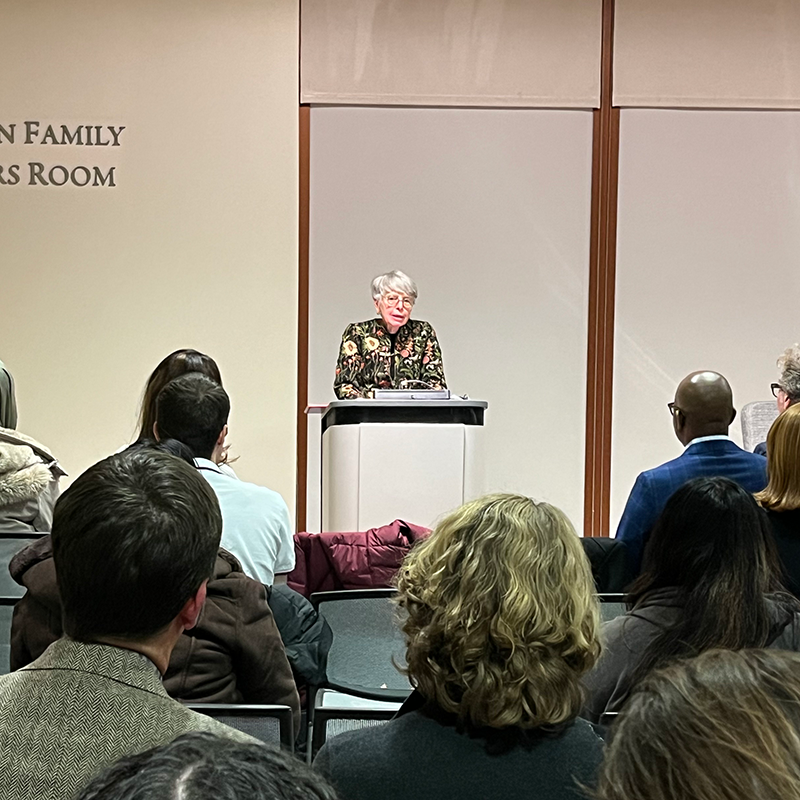
 By Janna Malamud Smith
Some years ago when I was writing a memoir about my father, I read through the journals he had filled as a young man as he slowly taught himself to write. Practice sentences, paragraphs, poems, plot ideas filled the pages. He copied quotations that felt meaningful including the whole of John Keats’ magnificent sonnet, “When I have Fears that I may cease to be…”
If you haven’t read the sonnet, it helps to know that the 22-year-old poet writes it in 1818 after his mother and brother have died of tuberculosis. His father is already more than a decade dead. Life is fragile; and, indeed, Keats dies before his 26th birthday. In the poem, the young poet is pensive, filled with longing. His mind is on fire with creative ambition, and he fears dying, in his words, “before my pen has gleaned my teeming brain.” He is filled with lust and worries, too, about losing Fanny Brawne, the young neighbor with whom he’s in love: fears that he might “Never have relish in the faery power of unreflecting love.” These doubts rouse despair and he ends, “then on the shore/ Of the wide world I stand alone, and think/Till love and fame to nothingness do sink.”
At times my father was almost drowned by his own despair as he worked to become a writer, and, also, to find love. He was close to penniless; his family was in tatters; his immigrant father earned a meager living; his mother had died when he was fifteen; his one brother was suffering from schizophrenia. – I find it easy to imagine the comfort the poem offered him, and why he held it close. Serendipitously, many years later, but long before I found his journals, I read the sonnet in a high school English class and memorized it. I remember him asking me to recite it to him.
I tell this story as a way to bring a long dead parent briefly back to life. Also because lately, some good-hearted people have been trying to “save” college humanity programs and bookstores by claiming that reading literature increases a reader’s empathy. Thus, it seems, literature is now valuable because it has utility. Well and good if it does, but to me, claiming empathy for others as literature’s justification – and I am a retired psychotherapist and favor empathy – is like claiming that we should preserve open wilderness to provide background for selfies.
Let’s be clear, literature is essential – all art is essential. Why claim that it is merely useful? Some of the oldest remnants of human life include cave paintings, ivory figures of pregnant women, and flutes carved from animal bones. Oral literature preceded the written word, but by early in the third millennium BCE, people in Mesopotamia wrote verse. Art evolves and shape shifts to meet its place and moment. While poetry has lost the mass of readers it once had, films, graphic novels, and the occasional video game now join art’s ranks.
Many of you in this audience know this truth better than I, but I will say it anyway: Art is essential because the sheer beauty of a short story or a single line of poetry can render us breathless or give us chills, and, as with my father’s experience of Keats’ sonnet, offer a crucial encounter with another soul. This moment of contact, of intimacy, of recognition, of terror, disgust, tears or delight, squeezes and expands our sensibilities; leaves us energized and less alone. We gain a cosmic companionship, and with it perhaps some greater empathy for ourselves, and for our own nascent and mortal and impossible desires.
Honoring the labor that creates this inexplicable gift is why we have the PEN/Malamud Award for Short Fiction, and why tonight it gives me pleasure to give it to David Means.